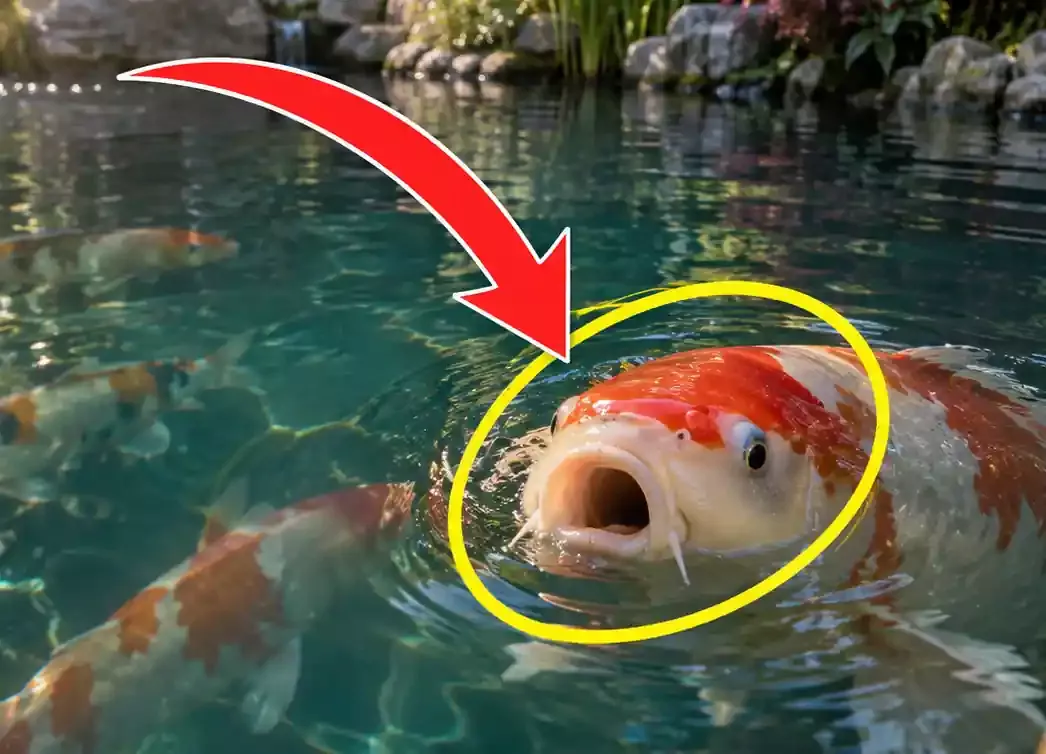
Your pond is sparkling. The waterfall is doing its soothing waterfall thing. Your favorite koi glides past like a tiny celebrity arriving at an underwater awards show.
Everything looks fine.
But clear water is not the same thing as safe water. During hot weather, the problem your koi face may be something you cannot see: too little oxygen. And the most surprising part? Trouble can peak while you are asleep, long after the afternoon heat has passed.
A global heat headline with a backyard-sized consequence
In its September 10, 2026 report, NOAA identified August 2026 as the warmest August in its global record. Copernicus also reported the warmest August globally, tying July 2023 as the warmest month across all calendar months in its dataset.
That does not mean every backyard broke a temperature record. Your pond has its own conditions, shaped by shade, weather, size, stocking and equipment. A global headline is a reason to pay attention—not proof that your fish are in trouble.
Still, it raises a useful question: when the weather turns unusually hot, does your pond have any breathing room?
Your koi are not the only ones breathing
As water warms, it can hold less dissolved oxygen. Meanwhile, warmer conditions increase fish metabolism and oxygen demand. That is the awkward combination: less available oxygen, more demand for it. University of Florida Extension explains this summer double squeeze.
Think of it as inviting more guests to dinner while shrinking the pizza.
The guest list also includes organisms you never bought at a koi dealer. Plants, algae and microbes use oxygen, too. Your pond is an entire living neighborhood, not just a fish collection with attractive landscaping.
The plot twist happens before breakfast
Surely the hottest afternoon is the moment to worry most?
For temperature, perhaps. For oxygen, the answer can be different.
In daylight, algae and aquatic plants produce oxygen through photosynthesis. At night, photosynthesis stops, but respiration continues. In ponds influenced by these daily cycles, oxygen commonly reaches its lowest level just before dawn. New Mexico State University describes this day-and-night pattern.
That means a reassuring afternoon visit is only a snapshot. It does not tell you what happens at 5 a.m.
Your pond does not stop working when you go to bed. During hot spells, keep established aeration running overnight. A peaceful-looking surface is not a measurement of what is happening underneath.
When “they want breakfast” might mean something else
Koi are excellent at convincing humans that the previous meal never happened.
But repeated surface gasping is not ordinary begging. Fish struggling to breathe, especially several fish at once, need immediate attention. Low oxygen is one possibility; damaged gills or other water-quality problems can also cause breathing distress.
Increase aeration promptly, then investigate. Do not wait for a dramatic change in water color. A dissolved-oxygen test or meter is far more informative than a photograph of a beautiful pond. UF/IFAS identifies surface gasping as a warning sign of oxygen depletion.
Heat can make an ammonia problem nastier, too
Oxygen is not the only invisible concern. Fish release ammonia, and its toxicity depends partly on temperature and pH. At higher temperatures and pH, a greater share of total ammonia is present in its more toxic form.
That is why an ammonia result should be considered alongside a temperature and pH reading—not treated as an isolated number. Clear water does not rule out ammonia. You need a test. UF/IFAS explains how ammonia, temperature and pH interact.
And if ammonia is detected, feeding more because the fish look interested is not helping. Reduce or temporarily stop feeding while correcting the problem; uneaten pellets should be removed. Their enthusiasm is charming. It is not a water-quality assessment.
A heatwave plan that does not require panic shopping
Start with the equipment and information you already have:
- Measure the water, not just the weather. Record pond temperature in the morning and late afternoon during hot spells. Look for changes rather than guessing from the air temperature.
- Check actual flow. Make sure established pumps and aerators are operating properly. Inspect accessible intakes and mechanical filters for blockages, following the equipment instructions.
- Give the pond some shade. A securely installed shade sail can reduce direct sun exposure. Leave airflow and access, and do not lay a cover directly on the water.
- Test when behavior changes. Check dissolved oxygen if possible, along with ammonia, nitrite, pH and temperature. Write down the results and the time.
- Have an outage plan. Know how you would run emergency aeration if the power failed. Check backup equipment before it becomes the most important thing you own.
These are preparation steps, not a guarantee against every problem. A heavily stocked pond and a lightly stocked pond will not necessarily respond to the same heat in the same way.
Please do not turn the pond into an ice bath
Seeing stressed fish can make “add lots of cold water” sound wonderfully logical. Resist the emergency makeover.
Avoid abrupt temperature or pH changes. If a partial water change is appropriate, use suitable replacement water and handle it gradually. Municipal water may contain chlorine or chloramine, which must be removed with appropriate treatment before exposing fish to it. NMSU highlights this source-water hazard.
Do not assume untreated well water or collected rainwater is automatically safe, either.
If koi are gasping, losing balance or deteriorating, increase aeration immediately and seek prompt help from an aquatic veterinarian or qualified fish-health professional. Skip feeding during the immediate crisis, test the water, and do not add medication simply because the fish look unwell.
The most useful thing to share is not the scary headline
Record heat makes news. Your koi just need a pond that keeps working through it.
You do not need to become a climate scientist or stare at a thermometer all day. You need a little information, reliable equipment and a plan made before anything goes wrong.
If you share one reminder with another pond owner, make it this:
A pond can look perfect and still need attention. Check the water—not just the view.