
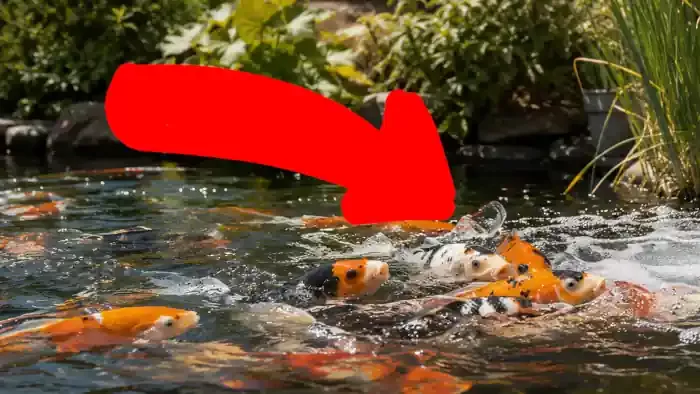
A heatwave changes the conditions inside a koi pond as well as the weather above it. Watch pond temperature, actual flow, oxygen and fish behavior. Preparation is easier than discovering a failed air pump when the fish are already gasping.
These nine steps help you review the system before and during hot weather. They reduce risk; they do not make a pond immune to extreme heat.
Why Hot Weather Is Such a Big Deal for Koi Fish
Koi fish live in water, so it is easy to assume they are automatically protected from hot weather. After all, they are not lying on a sidewalk, baking in the sun, questioning their life choices.
But pond water changes with the weather. When air temperatures stay high for days, especially with hot nights and strong sun, the pond absorbs and holds that heat. Shallow ponds warm up even faster. Small ponds warm up faster than large ponds. Dark liner ponds in full sun can feel the heat intensely.
Here is the problem: warm water holds less oxygen than cooler water.
Warmer conditions can increase fish metabolism and oxygen demand, while microbes and other pond life also consume oxygen. At stressful temperatures, fish may become less active or stop feeding, so do not assume that hotter water always produces lively, hungry koi.
The fish need more oxygen, but the water holds less of it.
That is why summer oxygen crashes can happen suddenly. The pond may look fine in the afternoon, then by early morning the fish are gathered at the surface or near moving water because oxygen levels dropped overnight.
The Early Warning Signs Your Koi Are Heat-Stressed
Koi are not subtle when they are uncomfortable. They may not send you a formal complaint letter, but they will show signs that something is wrong.
Watch for these red flags during extreme heat:
- Gasping at the surface, especially early in the morning
- Hanging around waterfalls, fountains, or air stones
- Sudden loss of appetite
- Lethargy or sitting near the bottom
- Clamped fins
- Flashing or rubbing against pond surfaces
- Cloudy water or a foul smell
- Rapid algae growth
- Fish crowding in one shaded or moving-water area
Gasping is urgent. Increase aeration safely, pause feeding and check actual flow and water conditions. Low oxygen is one possibility; damaged gills and other problems can look similar. Seek prompt aquatic veterinary or qualified fish-health help if koi are struggling, losing balance or deteriorating.
1. Add More Aeration Immediately
If you do only one thing during a heat wave, make it this: increase aeration.
Aeration helps move oxygen into the water and helps circulate the pond. During normal weather, your waterfall or filter return may be enough. During a heat wave, “enough” can become “not even close” very quickly.
Good options include:
- Air pumps with diffuser discs
- Air stones
- Waterfalls
- Fountains
- Venturi returns
- Extra surface agitation from pumps
The goal is to keep the water moving and the surface broken. Still, glassy water may look beautiful in photos, but in hot weather your koi would probably vote for bubbles over beauty.
Run aeration day and night during extreme heat. Oxygen problems are often worst before sunrise because plants and algae consume oxygen overnight. That means the most dangerous time may not be the hottest part of the afternoon. It may be the quiet, early morning hours when everything looks peaceful but oxygen is at its lowest.
2. Keep Waterfalls and Pumps Running 24/7
A heat wave is not the time to turn off your waterfall to “save electricity” or reduce noise. Your koi pond’s circulation system is the life-support system.
Established circulation helps deliver water to the filter and supports gas exchange. Check actual flow, rather than assuming that a running pump is working properly. More flow is not automatically better: avoid exhausting the fish with excessive current or suddenly mixing stagnant, oxygen-poor bottom water into their habitat.
Make sure:
- Your pump intake is not clogged with leaves or algae
- Your skimmer basket is clean
- Your waterfall is flowing strongly
- Your filter is not bypassing or backing up
- Your air pump is working properly
A weak trickle that used to be a waterfall is not enough. If the pond sounds like it is politely whispering, your koi may prefer something closer to a backyard whitewater rafting course.
3. Stop Overfeeding During Extreme Heat
This one hurts because feeding koi is one of the best parts of owning them. They come up, wiggle around, act like they have not eaten since the early 1700s, and make you feel like the most important person in the universe.
But during high heat, you need to be careful with food.
More food means more waste. More waste means more ammonia. More ammonia means more stress on the fish and the filter. In warm water, everything happens faster: digestion, bacterial activity, algae growth, and water quality problems.
During severe heat, reduce feeding according to fish condition, temperature, feed guidance and water tests. Pause feeding during breathing distress or unresolved ammonia/nitrite trouble. Do not choose predawn feeding merely because the air is cooler: oxygen may be at its daily low then.
And remember: koi can miss a meal. They will act betrayed, but they will survive. Your pond water quality may not survive if you dump in a buffet during a heat emergency.
4. Test the Water Before the Pond Becomes a Mystery Crime Scene
Hot weather can magnify small water quality issues. A pond that is “probably fine” in spring can become a full-blown detective episode in July.
Test for:
- Ammonia
- Nitrite
- Nitrate
- pH
- KH/alkalinity
- Water temperature
If you have a dissolved oxygen test kit or meter, even better. But even without one, koi behavior can tell you when oxygen is becoming a problem.
Aim for no detectable ammonia or nitrite using a suitable test. Interpret total ammonia alongside temperature and pH, and investigate a positive result promptly. Test method, units and interference from treatments also matter.
Use the water-quality guide below to interpret readings alongside the fish’s condition.
Learn more about koi pond water quality testing
5. Add Shade Before Your Pond Turns Into a Solar Oven
Shade can make a major difference, especially for shallow ponds or ponds that get blasted by afternoon sun.
Temporary shade options include:
- Shade sails
- Patio umbrellas
- Canopies
- Floating pond plants
- Pergolas
- Landscape plantings around the pond
Do not cover the pond so tightly that air movement is reduced. The goal is shade, not a koi sauna with a lid.
Water lilies can also help shade the surface, but they should not cover the entire pond. Your koi still need open water for gas exchange, feeding, and circulation.
6. Watch Out for Evaporation and Low Water Levels
During a heat wave, ponds can lose water quickly through evaporation. Lower water levels can cause several problems:
- Less total water volume
- Faster temperature swings
- More concentrated waste
- Reduced skimmer performance
- Pump problems if intake levels drop
Restore an appropriate operating level with suitable replacement water. Check whether municipal water contains chlorine or chloramine and use treatment that addresses it, following product directions for the actual filling method. Do not assume well water or collected rainwater is safe without assessment.
A slow, steady top-off is usually better than blasting the pond with cold tap water all at once. Sudden temperature changes can shock koi, even when you are trying to help.
7. Do Not Make Giant Sudden Water Changes Unless It Is an Emergency
Water changes are useful, but during heat waves they need to be done carefully. A moderate water change with properly treated water can help improve water quality. A massive sudden water change with cold, untreated water can create a new problem.
Think of koi like guests at a luxury spa. They appreciate fresh water. They do not appreciate being suddenly thrown into a different climate zone.
For ammonia or nitrite trouble, a controlled partial change with tested, appropriately conditioned replacement water may help. Avoid abrupt temperature or pH shifts. The amount and pace should respond to the actual readings and fish condition; a heatwave is not a reason to improvise a large cold-water flush.
8. Clean Filters, But Do Not Destroy Your Beneficial Bacteria
Good filtration is critical during hot weather because koi waste and uneaten food can quickly degrade water quality.
Clean mechanical filter pads, skimmer baskets, and pump strainers so water can flow freely. But be careful with biological filter media. Do not rinse bio media in chlorinated tap water, and do not aggressively clean everything at once unless absolutely necessary.
Your beneficial bacteria are doing important work converting toxic ammonia into less harmful compounds. During a heat wave, your pond needs those bacteria more than ever.
The filtration guide below explains the different jobs of mechanical and biological components.
Read more about koi pond filtration
9. Have a Backup Plan for Power Outages
Heat waves can strain the power grid. Storms can also knock out electricity. For a koi pond, a power outage during extreme heat can become dangerous fast because pumps, waterfalls, filters, and air pumps may all stop at once.
Every serious koi keeper should consider a backup plan, such as:
- Battery backup air pumps
- A generator only as part of a prepared outdoor power plan, following its instructions and carbon-monoxide precautions
- Solar backup aeration
- Extra air stones ready to deploy
- A plan for emergency water movement
You do not need to turn your backyard into a military command center, but you should know what you would do if the power went out on the hottest night of the year.
The “Morning Gasp” Problem: Why Fish Often Struggle Before Breakfast
One of the most alarming heat-wave pond problems is finding koi gasping at the surface early in the morning.
This happens because oxygen levels often drop overnight. During the day, algae and plants may produce oxygen through photosynthesis. At night, they consume oxygen. The fish consume oxygen too. Bacteria consume oxygen as they break down waste. By early morning, dissolved oxygen can be at its lowest point.
That is why extra aeration should run overnight, not just during the afternoon. The hottest time of day may be uncomfortable, but the lowest oxygen point can happen while you are asleep.
Your koi do not care that you wanted a peaceful morning coffee. If they are gasping at sunrise, the pond needs immediate attention.
What Not to Do During a Koi Pond Heat Emergency
Sometimes the wrong “help” can make things worse. During extreme heat, avoid these common mistakes:
- Do not dump ice directly into the pond. Sudden cold spots and temperature swings can stress fish.
- Do not overfeed because the koi are begging. They are professional beggars.
- Do not shut off pumps or waterfalls. Circulation matters.
- Do not deep-clean the entire filter at once. You may damage the biofilter.
- Do not ignore gasping fish. Surface gasping can be a serious oxygen warning.
- Do not add untreated tap water. Always use dechlorinator when needed.
Build a Pond Better Prepared for Heat
Once the heat wave passes, it is worth asking whether your pond is built for increasingly intense summer weather.
A heat-resilient koi pond should have:
- Adequate depth and space designed for the fish and local climate; do not assume a well-mixed pond has a cool bottom refuge
- Strong aeration
- Reliable circulation
- A properly sized filter system
- Some shade during the hottest part of the day
- Easy access for water testing and maintenance
- Backup aeration for outages
- Reasonable stocking levels
Overstocked ponds are especially vulnerable during heat waves because more fish means more oxygen demand and more waste. If your pond looks like a crowded koi nightclub every time you toss in food, it may be time to rethink stocking density or upgrade filtration and aeration.
The care guide below brings the daily routines together.
Final Thought: Your Koi Pond Is Not Just Decoration — It Is a Living System
A koi pond may look calm from the patio, but under the surface it is a living system full of fish, bacteria, plants, algae, oxygen cycles, waste breakdown, and temperature changes. During normal weather, that system may balance itself beautifully. During a heat wave, it needs extra help.
Preparation can reduce heat-related risk: check aeration, actual flow, shade and stocking, record water tests, and rehearse a power-loss plan. No single measure guarantees protection from a severe event.
Your koi do not need a luxury resort. They need clean, oxygen-rich, stable water.
And if today’s heat-dome headlines are making humans miserable, imagine being a koi fish in a shallow pond with no shade, weak aeration, and an owner who just tossed in three handfuls of food because “they looked hungry.”
Do not be that owner.
Be the hero your koi think you are when they swim up to you every morning like glittery little water puppies.
Because during a heat wave, a little pond care can be the difference between a thriving koi pond and a backyard emergency.
Quick Heat-Wave Koi Pond Checklist
- Run air pumps and waterfalls 24/7
- Add temporary shade if the pond is in full sun
- Reduce feeding during extreme heat
- Test ammonia, nitrite, pH, KH, and temperature
- Top off evaporated water with dechlorinated water
- Clean skimmer baskets and mechanical filter pads
- Watch for gasping, lethargy, or fish crowding near moving water
- Prepare backup aeration in case the power goes out
If the heat is making you uncomfortable, your koi pond probably needs attention too. Add oxygen before there is a crisis, and your koi will glide through the heat wave like the backyard royalty they are.
Further Reading
UF/IFAS: dissolved oxygen explains oxygen supply and daily cycles. For backup power, review CPSC storm and generator safety: never operate a fuel-burning generator indoors or in an attached garage, and follow placement and electrical instructions.