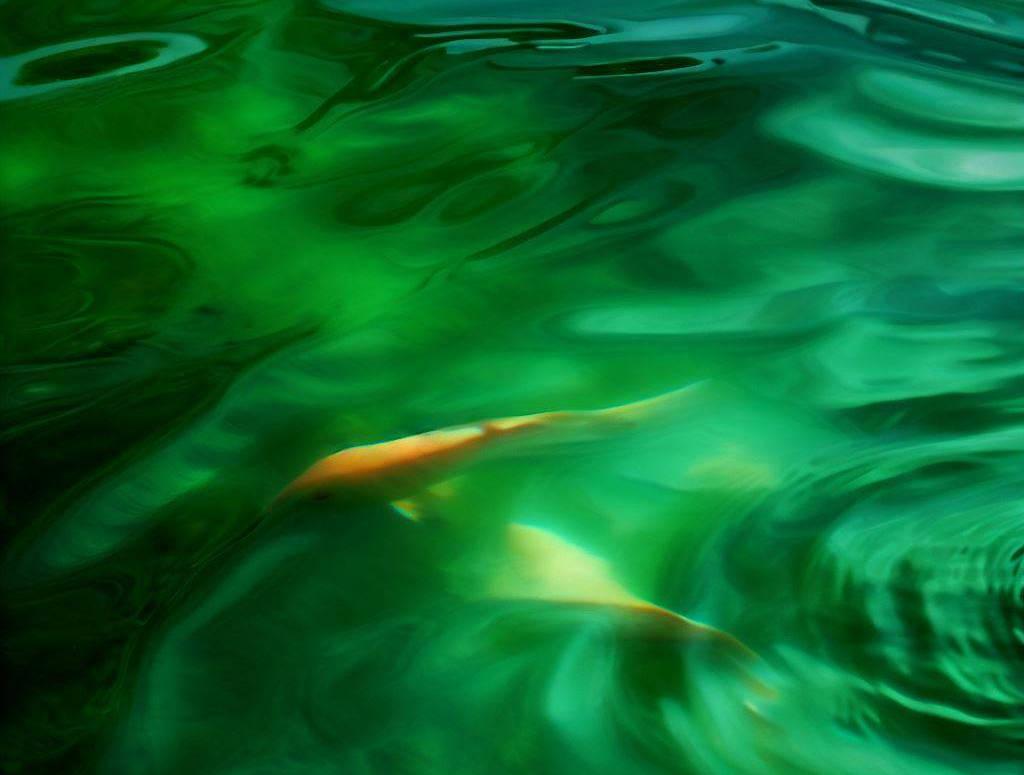
Green water commonly comes from suspended algae, but first confirm what changed and whether the fish are in distress. Cloudiness, attached strands, and a surface film are different observations. Diagnosis of the water problem should guide the equipment or management response.
Describe What You See
ObservationPossible routeUniform green tint through the waterSuspended algae investigationLong strands attached to surfacesString-algae managementBrown particles or milky cloudinessSuspended waste, source-water, or filter investigationUnusual scum with sick fishPrompt professional assessment; avoid guessing the organismCheck Fish and Chemistry First
Look at breathing, balance, and group behavior. Confirm aeration and circulation, then test temperature, ammonia, nitrite, pH, and alkalinity as appropriate. Dense growth can change oxygen and pH over a day. A green pond is not automatically toxic, and a clear pond is not automatically safe.
Review the Inputs
Note sunlight, feeding, fish load, lawn or garden runoff, debris, and recent filter service. These can support growth or reduce the system's margin. Removing one nutrient source may help, but no single nitrate number predicts every bloom. Avoid assuming that adding bacteria will outcompete algae.
Choose the Correct Route
For confirmed suspended algae, assess UV clarification and downstream waste removal. For attached strands, use string-algae management. If the diagnosis is uncertain or fish deteriorate, get appropriate help before adding an algaecide or clarifier. Large die-offs can create oxygen and waste problems.
Track the Response
Record observations and tests before and after changes. Do not promise clearing within a week or use visibility alone to judge recovery. Use the green-water correction sequence when the target is established, and clarity maintenance for the longer-term routine.