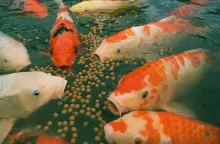
Learn how koi digest food without a true stomach, how water temperature changes metabolism, and how to adjust feeding for healthy fish and clean water.
Suitable nutrition supports growth and pigmentation, but it cannot guarantee an exact adult size, pattern, or show result. Genetics, age, individual development, health, and the pond environment also matter. Choose a plan that supports the fish rather than promises a rapid transformation.
Koi treats are optional extras, not a replacement for complete nutrition or a treatment for disease. Keep them a small part of the planned ration and offer them only when ordinary feeding is appropriate. The staple diet can also serve as the training reward.
The most useful feeding corrections reduce unplanned food and reveal how the pond responds. Do not rely on eager fish, clear water, or a five-minute timer alone to prove a ration is appropriate. Check the whole plan.
Mistake 1: Feeding until the Fish Stop Asking
Measure the intended amount and observe it being taken. Multiple family members, visitors, training sessions, and feeders can quietly add extra meals. Use one record and count treats within the plan. Divide a ration when useful; do not multiply it just by adding feeding times.
Base seasonal feeding on measured water conditions, the food instructions, fish condition, and the working filter. Seasons organize the plan; they do not impose the same ration on every pond. Heated systems and cold unheated outdoor ponds can need different care.
A koi food label helps compare formulations, but one percentage or ingredient cannot establish the whole diet's suitability. Start with intended use, complete-feed status, fish size, temperature guidance, freshness, and storage.
Koi are omnivorous carp, but natural foraging in a backyard pond may not supply a complete ration. Plan around a suitable complete food and measured conditions. Algae, insects, and kitchen treats are not automatic substitutes for formulated nutrition.
Build familiarity through predictable, calm visits and appropriate feeding. Koi can learn associations, but individuals differ in willingness to approach. A fish eating nearby is a useful outcome; direct hand contact is optional.
Record what a new koi looks like on arrival, then watch for changes in its prepared quarantine system. Shipping can affect behavior, but serious breathing or balance trouble should not be dismissed as settling in. Monitoring starts immediately after transfer.