
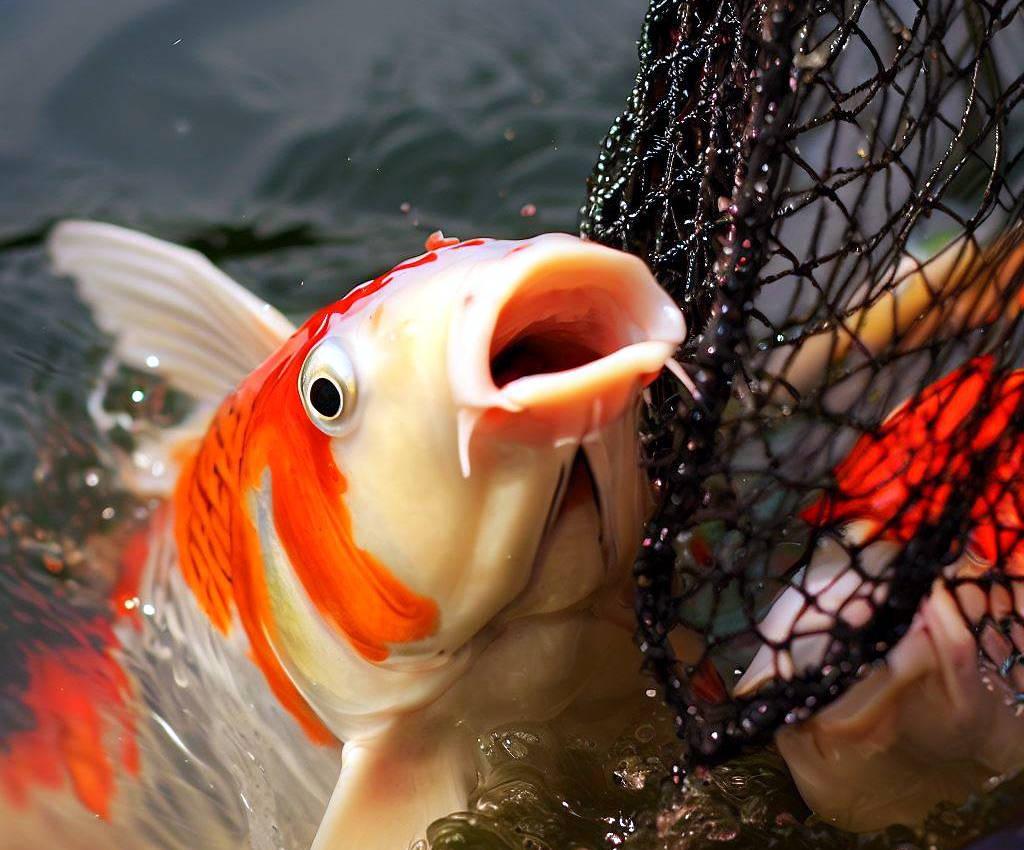
Prepare the destination and equipment before trying to catch a koi. The aim is a brief, controlled transfer with minimal chasing and support for the whole fish. Large koi and distressed fish are good reasons to ask an experienced keeper or fish veterinarian for help.
Decide Whether Catching Is Necessary
Routine health observation can usually begin from outside the pond. Do not net every fish simply to inspect it more closely. If a fish must move, make sure the receiving bowl, tank, or transport arrangement provides suitable water, oxygen, and protection from jumping. Repeated capture attempts can make a difficult situation worse.
Use Equipment for the Job
- A suitable koi pan net can guide and contain the fish in the water; do not suspend a large koi by ordinary net mesh.
- A koi sock or appropriate transfer equipment can support a controlled move when used correctly.
- Prepare smooth, clean, wet receiving equipment and a secure route without obstacles.
- Use separate equipment for quarantine and established fish groups.
Plan a Controlled Transfer
Move calmly, avoid crowding the fish into sharp surfaces, and pause if repeated attempts are escalating distress. Have a second experienced person available where needed. Keep air exposure brief and support the fish without squeezing the abdomen or handling the gills. Do not reduce the pond's water level by guesswork if that compromises life support.
Check the Fish and the System Afterwards
Observe breathing, balance, and visible damage, and document an injury if one occurs. Extra handling is not a reason for automatic salt, antiseptics, or calming additives. Persistent distress needs investigation. Use transport preparation, sick-koi support, and quarantine setup when the transfer is part of those tasks.