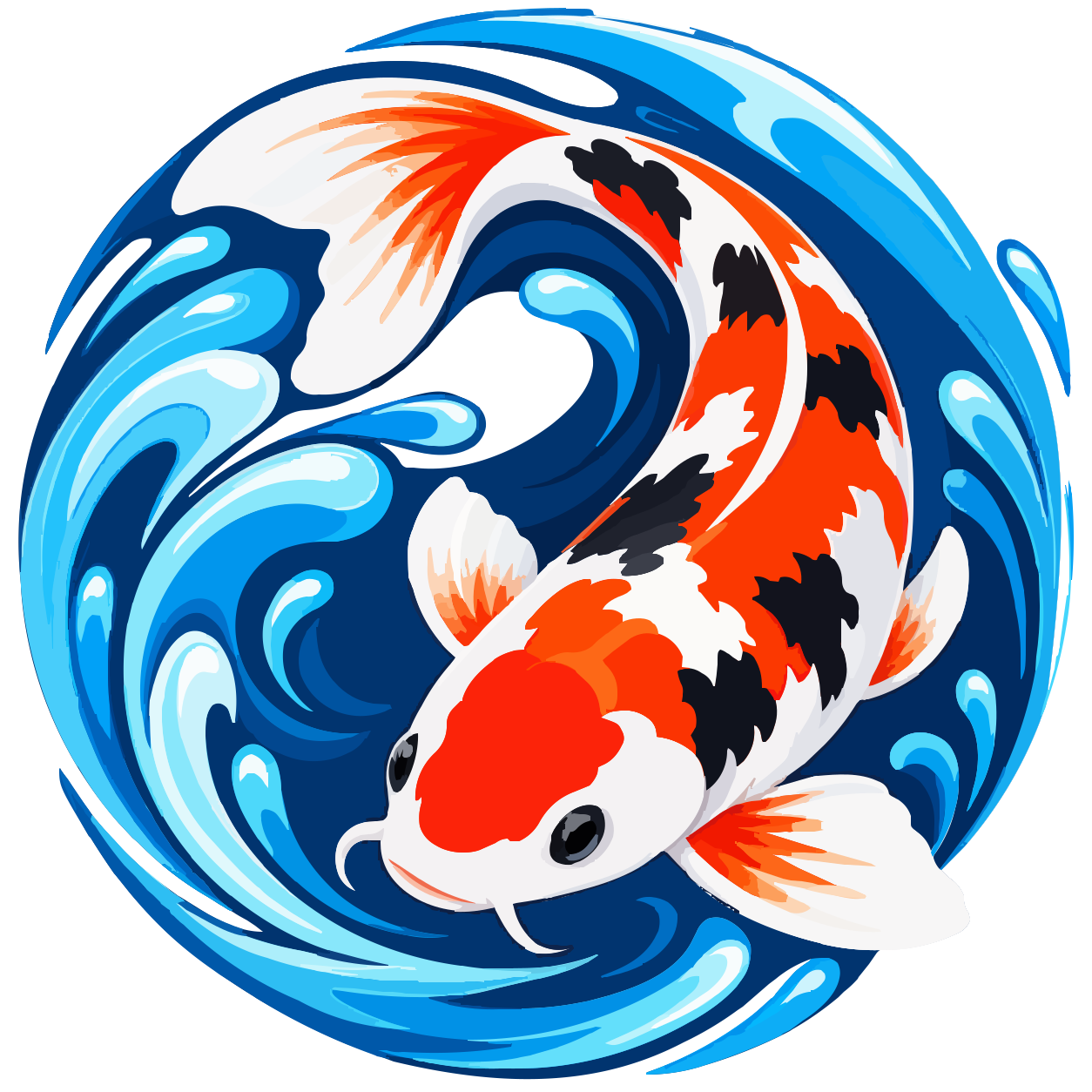

Koi can signify determination, good fortune, family hopes, or a personal turning point. The best interpretation starts with the image's setting: a traditional motif, a modern tattoo, a garden, and a live collection need not express the same idea.
The Carp and Dragon Gate Motif
The Chinese Dragon Gate legend associates a carp's difficult ascent with transformation into a dragon. It offers a familiar metaphor for persistence and achievement. Its use in other settings does not make the story exclusively Japanese or an account of real fish development.
Carp Streamers and Children's Day
In Japan, carp streamers are associated with Children's Day and hopes for children's healthy growth. The Japanese government's cultural feature explains that setting. These decorated streamers have their own tradition; their meaning should not be reduced to a compulsory arrangement of live fish in a pond.
Gardens and Artworks
A garden may use koi as part of its visual composition, and some specific garden motifs draw on carp-and-dragon imagery. Avoid assuming that every Japanese garden or koi collection is a Zen teaching. The designer's account or the institution's interpretation provides a better guide than a universal symbolism chart.
Modern Tattoos and Personal Choices
Modern designs often use koi to express resilience, change, or remembrance. Color and swimming direction may have a meaning chosen by the wearer or artist. There is no reliable rule that one direction, number, or variety tells every viewer the same story.
Meaning Does Not Set Husbandry
Symbolic preferences should fit the animals' needs. A pair does not automatically form a lasting bond, and a particular color cannot bring a guaranteed outcome. Start with an overview of symbolism, the Dragon Gate story, and the word koi itself to keep those interpretations clear.