
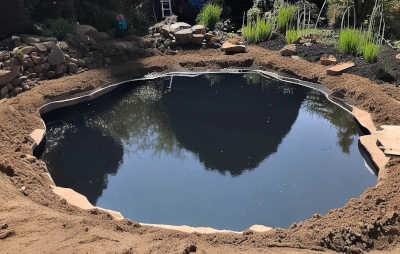
A pond is established when its operation and biological capacity have been demonstrated, not when construction finishes. Use a commissioning checklist before buying or transferring fish. Resolve uncertainty while the pond is empty and repairs are simpler.
Record What Was Installed
Keep a drawing, measured operating volume, equipment models, manuals, valves, and disposal routes. Record intended adult stock and the design flow. Identify any difference between the planned and installed system so later troubleshooting does not depend on assumptions.
Test Operation and Shutdown
- Inspect plumbing, liner edges, waste outlets, and overflow.
- Check return distribution and actual operating flow.
- Confirm safe equipment isolation and restart.
- Check backflow and drain-down when power stops.
- Test independent backup support under the actual installation conditions.
Evaluate and Prepare Source Water
Municipal disinfectants, well-water chemistry, and roof runoff create different concerns. Rainwater is not automatically safe or chemically suitable. Follow source-specific preparation and product instructions. Supervise filling and compare temperature and chemistry. Use safe water changes for refill practice.
Demonstrate Biological Capacity
A fixed waiting period, clear water, a bacteria bottle, or a zero test without a load does not certify readiness. Follow controlled fishless cycling with appropriate repeated measurements. Record ammonia and nitrite processing under the intended test load, and do not assume a result supports unlimited fish.
Prepare Quarantine and Arrival
Commission a separate quarantine setup and follow the quarantine protocol. Arrange the seller's transfer instructions and use arrival guidance appropriate to transport conditions. A floating bag alone is not a complete introduction plan.
Keep a Handoff Record
Write normal readings, settings, service steps, refill procedure, and who to call. Add fish conservatively and monitor the response before increasing load. Review maintenance and failure planning so readiness continues beyond the first introduction.