
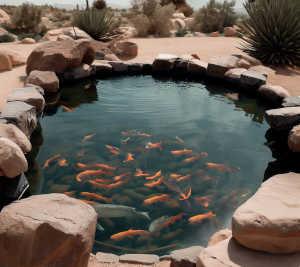
Conserve water by preventing avoidable losses and waste while preserving suitable conditions for the fish. Evaporation top-ups and water changes have different jobs. Cutting necessary replacement without testing can concentrate existing problems.
Find Avoidable Losses
Track the level, refill amounts, weather, splashing, overflow, and accessible leaks. Inspect waterfalls, hoses, joints, and filter discharge. Evaporation varies; do not use one daily allowance to declare a pond leak-free. Repair supported causes without shutting down essential aeration or filtration.
Reduce Exposure without Closing the Pond
Suitable shade and careful management of splashing can help reduce losses. Any cover must preserve gas exchange, observation, safe access, and appropriate structural support. A plastic sheet over the pond is not a general drought solution. Check temperature and oxygen as conditions change.
Understand What a Top-Up Does
Replacing evaporated water restores level but does not remove the dissolved material already present. Minerals and salt can accumulate depending on the source and management. Use nitrate and other chemistry trends to plan actual replacement. Do not assume a smaller refill also means the pond needs no water change.
Assess Alternative Sources
Rainwater, stored water, and well water require assessment before use. Consider roof runoff, storage contamination, pH, alkalinity, dissolved substances, and compatibility with the pond. Do not direct collected runoff straight into koi water or assume a natural source is fish-safe. Keep source records and seek appropriate testing.
Reduce the Waste Load
Measure feeding, remove collected solids promptly, and maintain filters efficiently according to their design. Avoid unnecessary whole-system draining or cleaning that destroys biological capacity. If water availability cannot support the load, reassess stocking and obtain a workable care plan rather than let chemistry deteriorate.
Review the Plan as Conditions Change
Keep refill and chemistry records together. Check applicable local water-use information for the actual site when planning work. Use water-change planning, source-water conditioning, and leak investigation to conserve with evidence.