
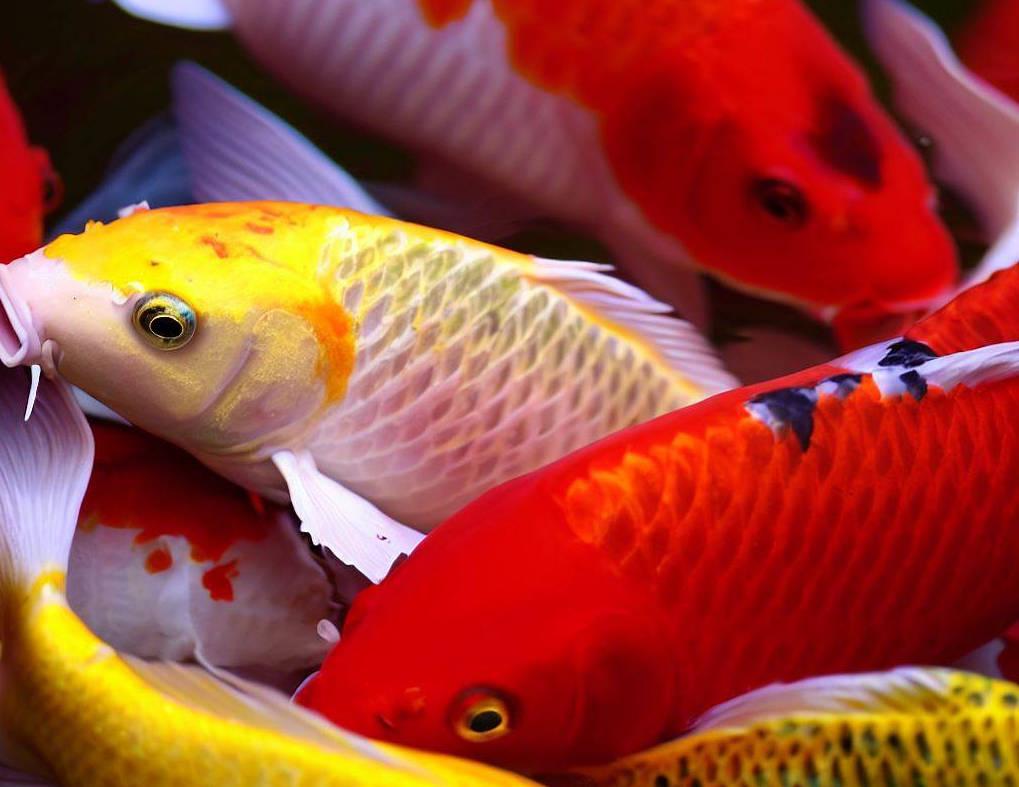
Koi color words make descriptions more precise. Learning a few basic terms helps you separate pigment, pattern, metallic skin, and reflective scales instead of calling every bright fish gold or every three-colored fish Showa.
The Basic Color Vocabulary
Word or descriptionWhat it describesHi / beniRed coloration or red markingsSumiBlack coloration or patternShiro / shirojiWhite / the white groundKiYellow in descriptive namesBlue-grayA useful visual description for features such as Asagi's backA color term does not identify the entire variety. It is one part of a description that also considers arrangement, sheen, and scale type.
Read the Arrangement
Kohaku combine red and white. Sanke and Showa both combine red, white, and black, with different pattern organization. Utsuri and Bekko can each include contrasting black with another color. The presence of three colors alone is therefore an incomplete identification.
Metallic Skin Versus Ginrin
Metallic sheen is a skin feature, familiar in varieties such as Ogon. Ginrin refers to sparkling scales and can appear on non-metallic varieties. Yamabuki Ogon are metallic yellow; Kigoi are non-metallic yellow. Doitsu describes reduced scaling and is a separate characteristic again.
Color in Photographs
Light, reflections, depth, and editing influence appearance. A warm exposure can make white look cream, while glare can mask markings. Ask for representative views before buying and use similar conditions when comparing your own fish over time. A photograph is evidence of one view, not every feature.
Use Color Carefully
A named color is not a universal symbol, a genetic recipe, or proof of health. Sudden abnormal redness, lesions, or raised scales need assessment rather than a variety label. Read color changes, pattern and variety language, and symbolic interpretations for those different questions.