
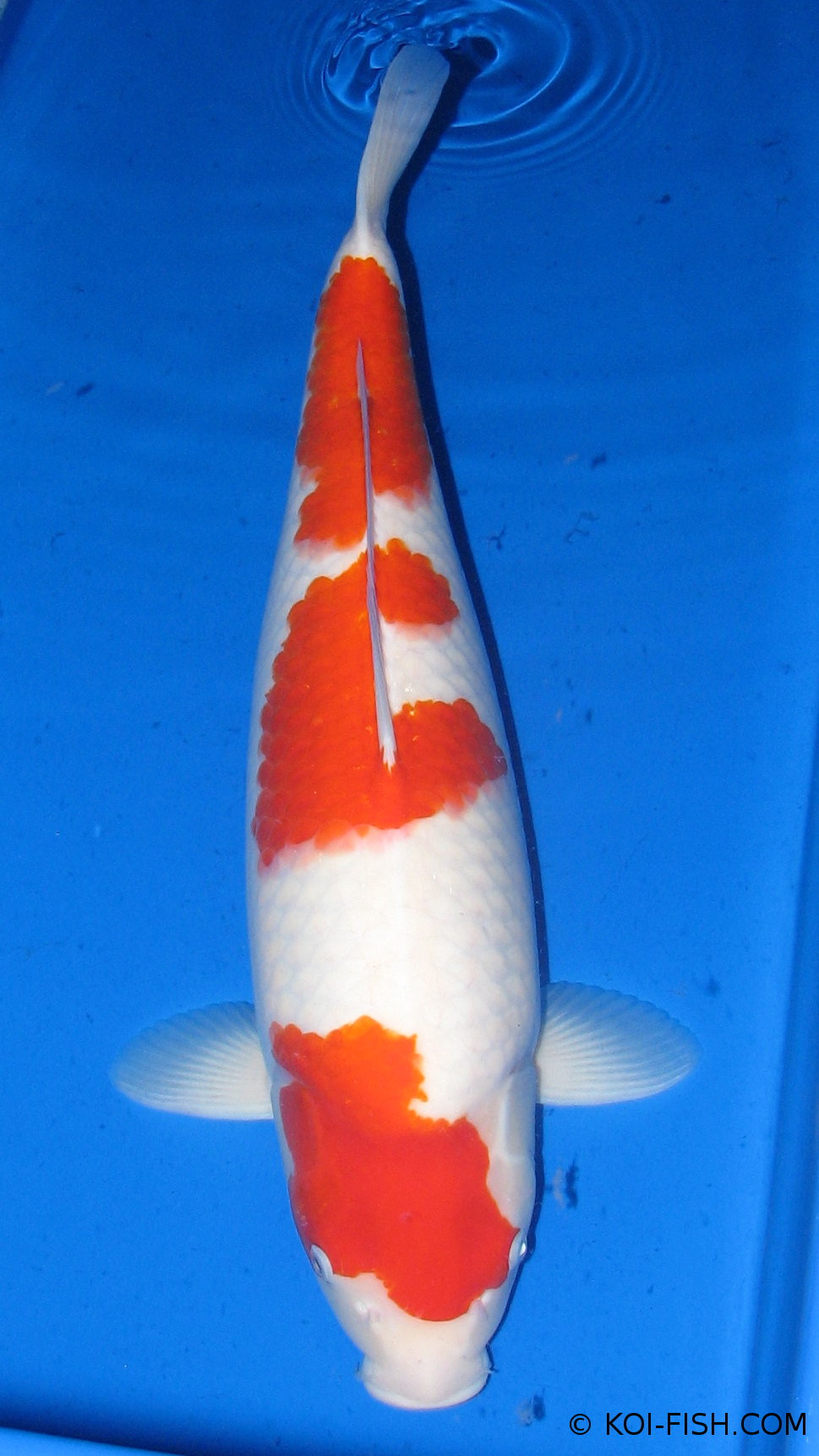
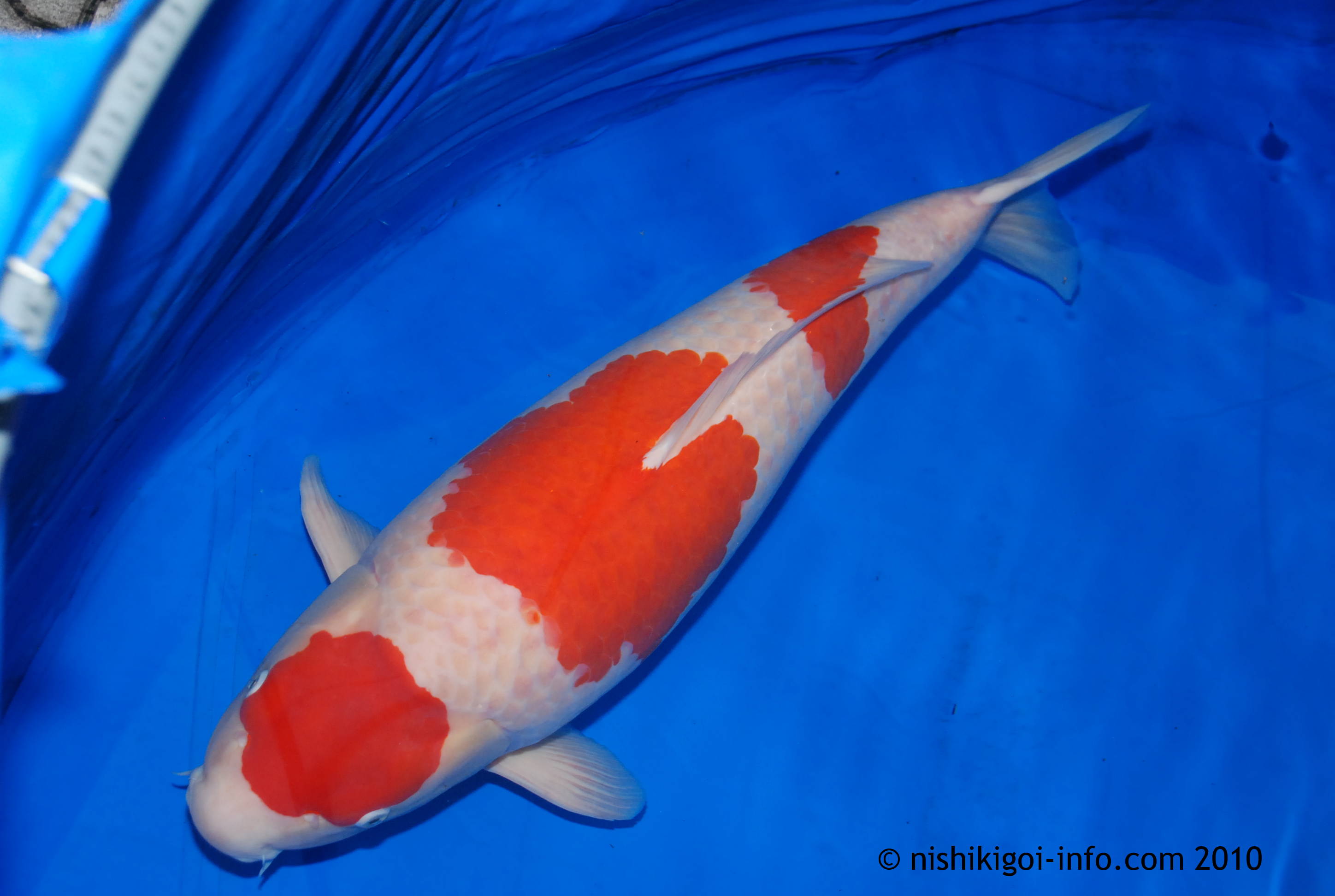
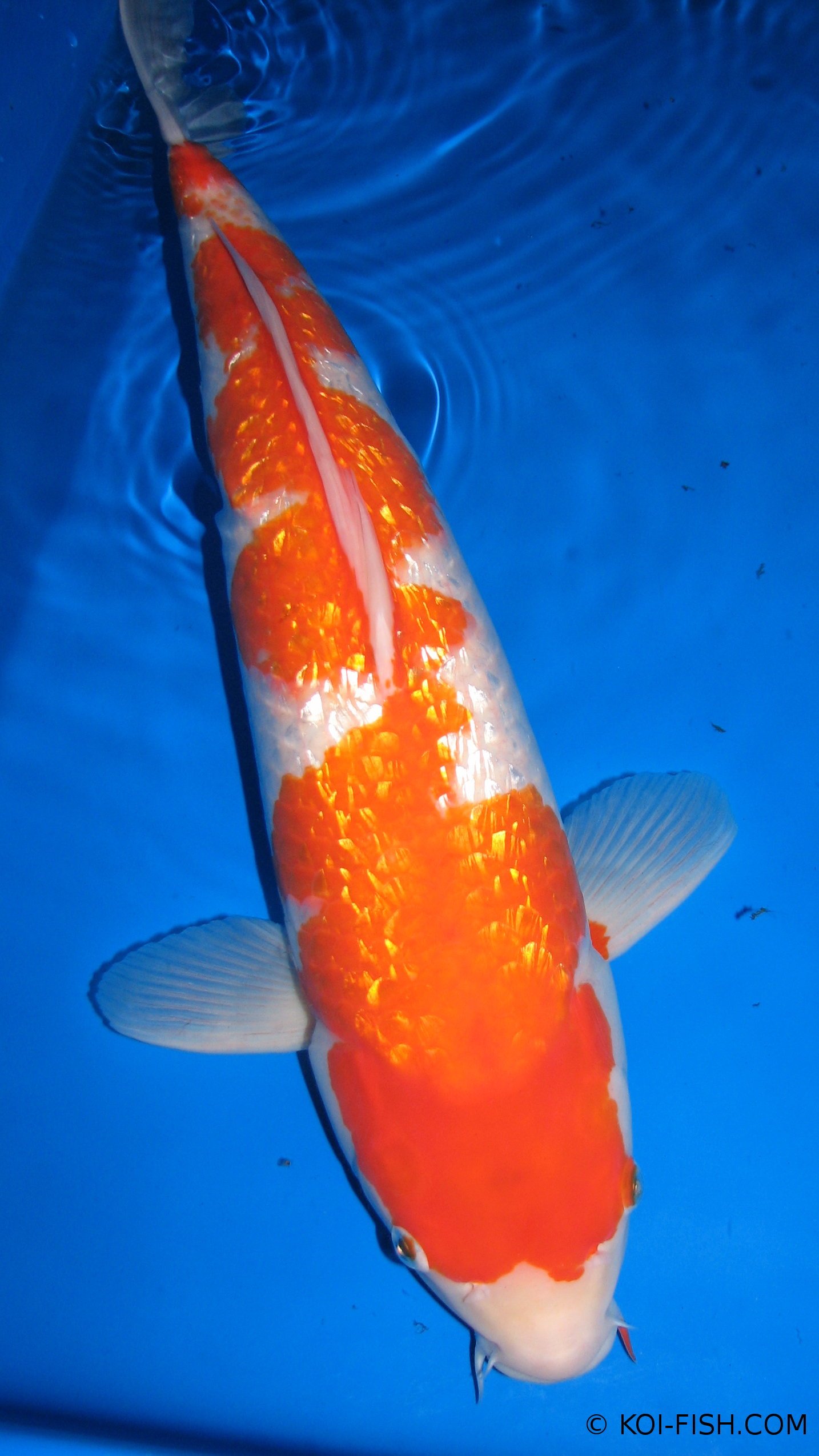
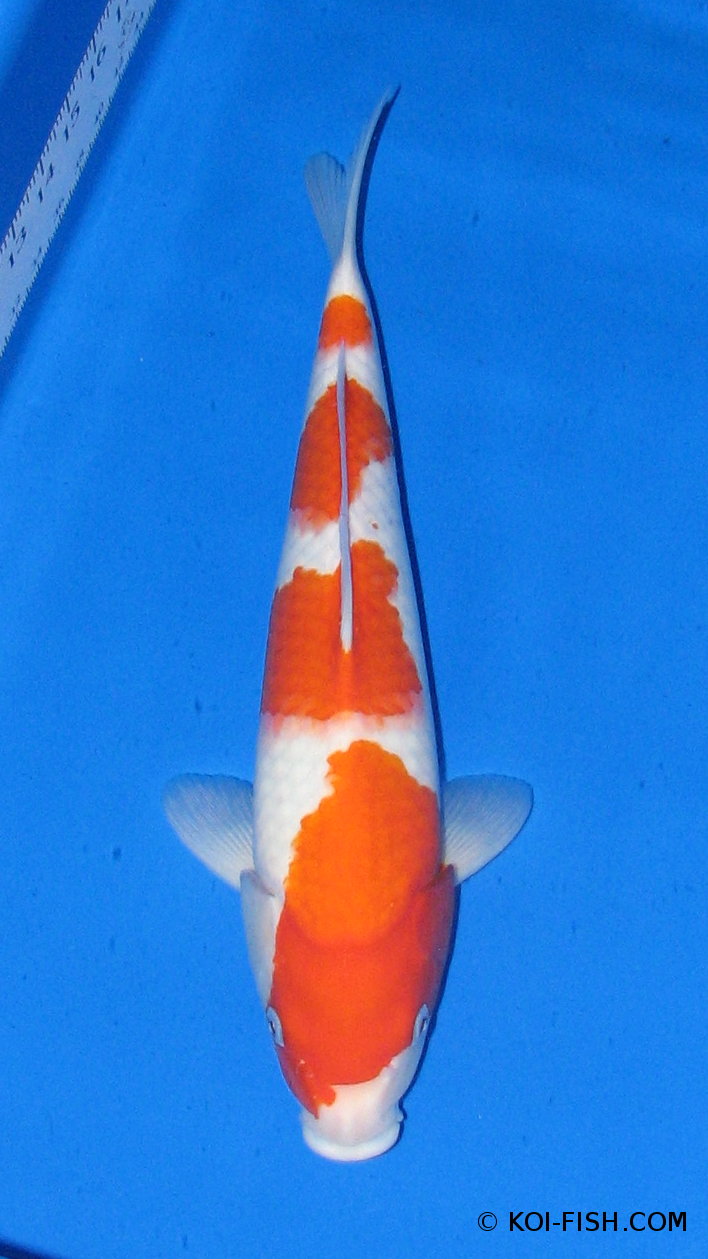
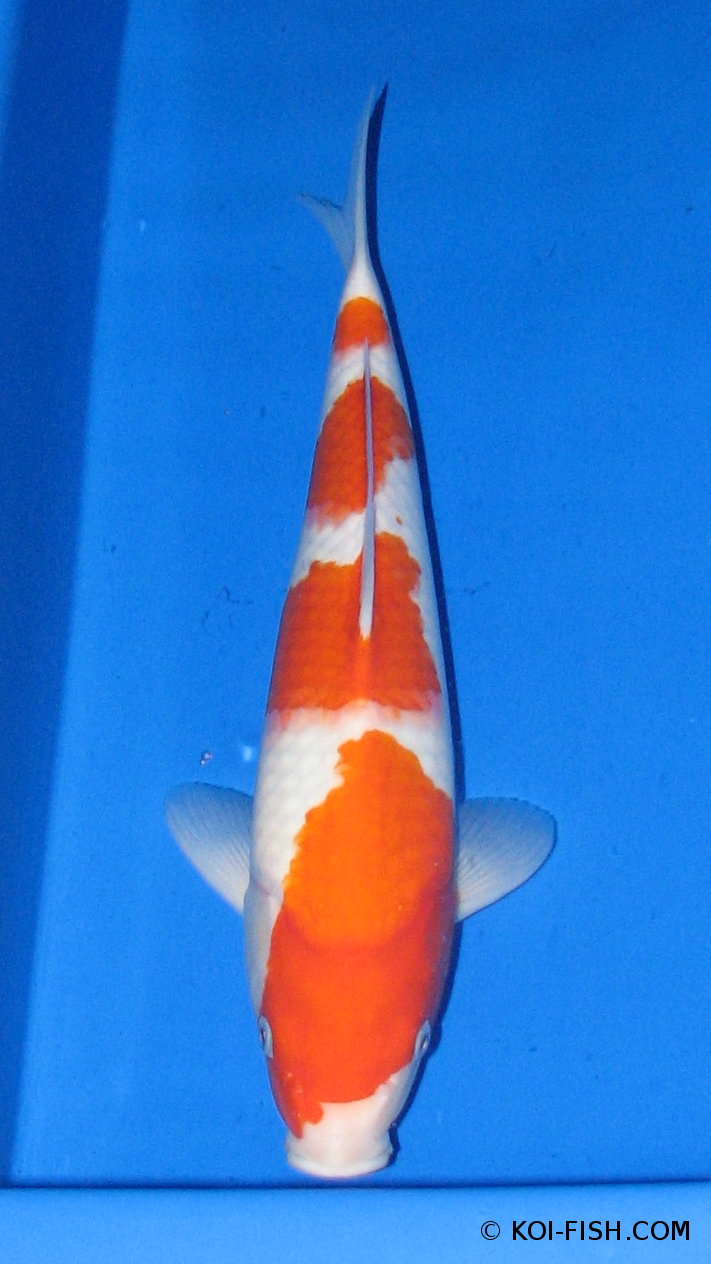
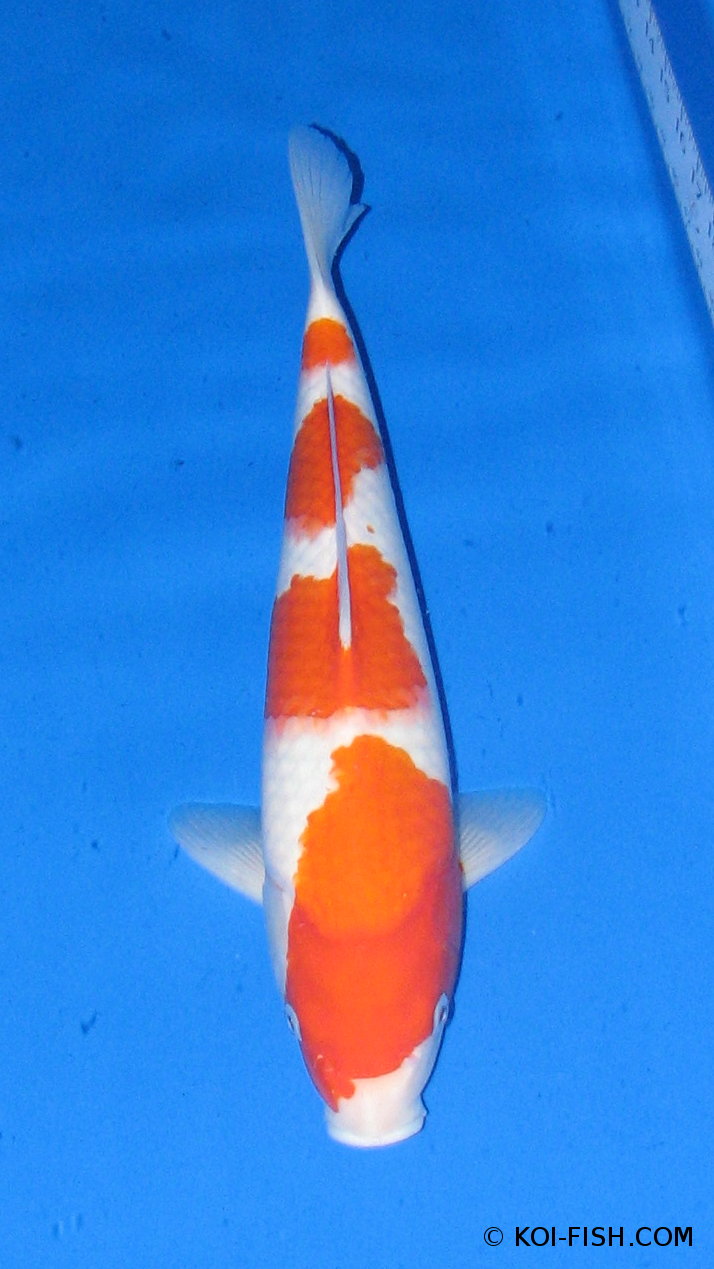
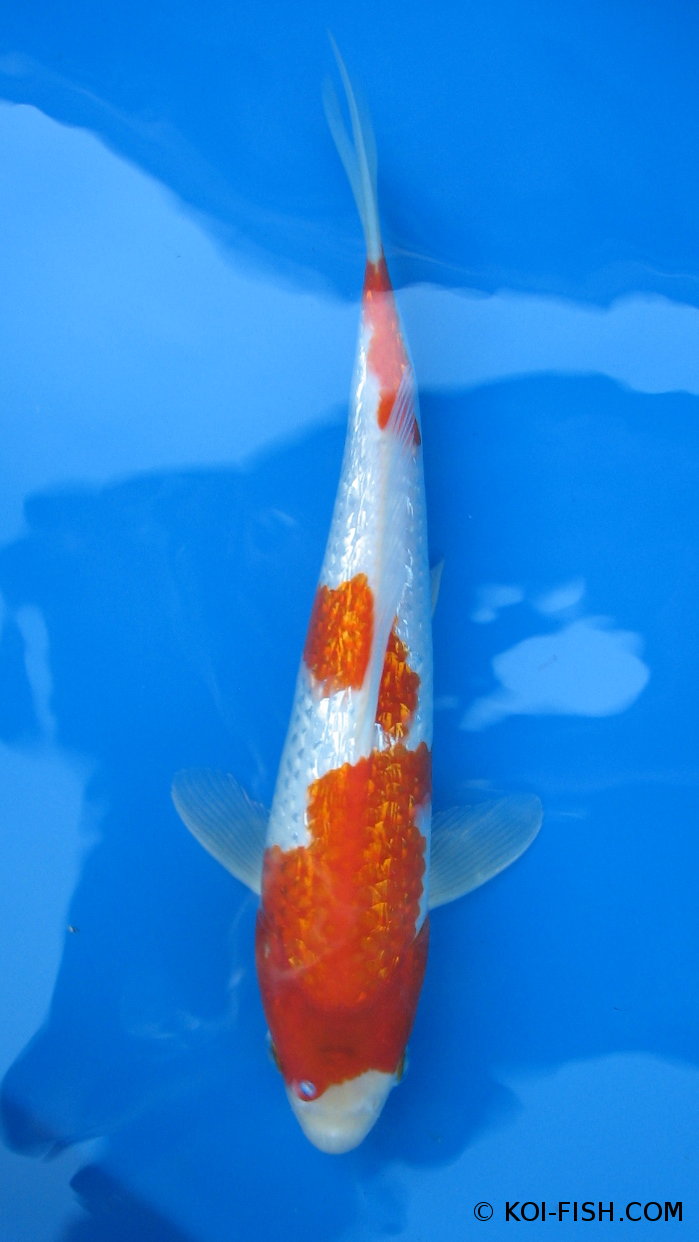
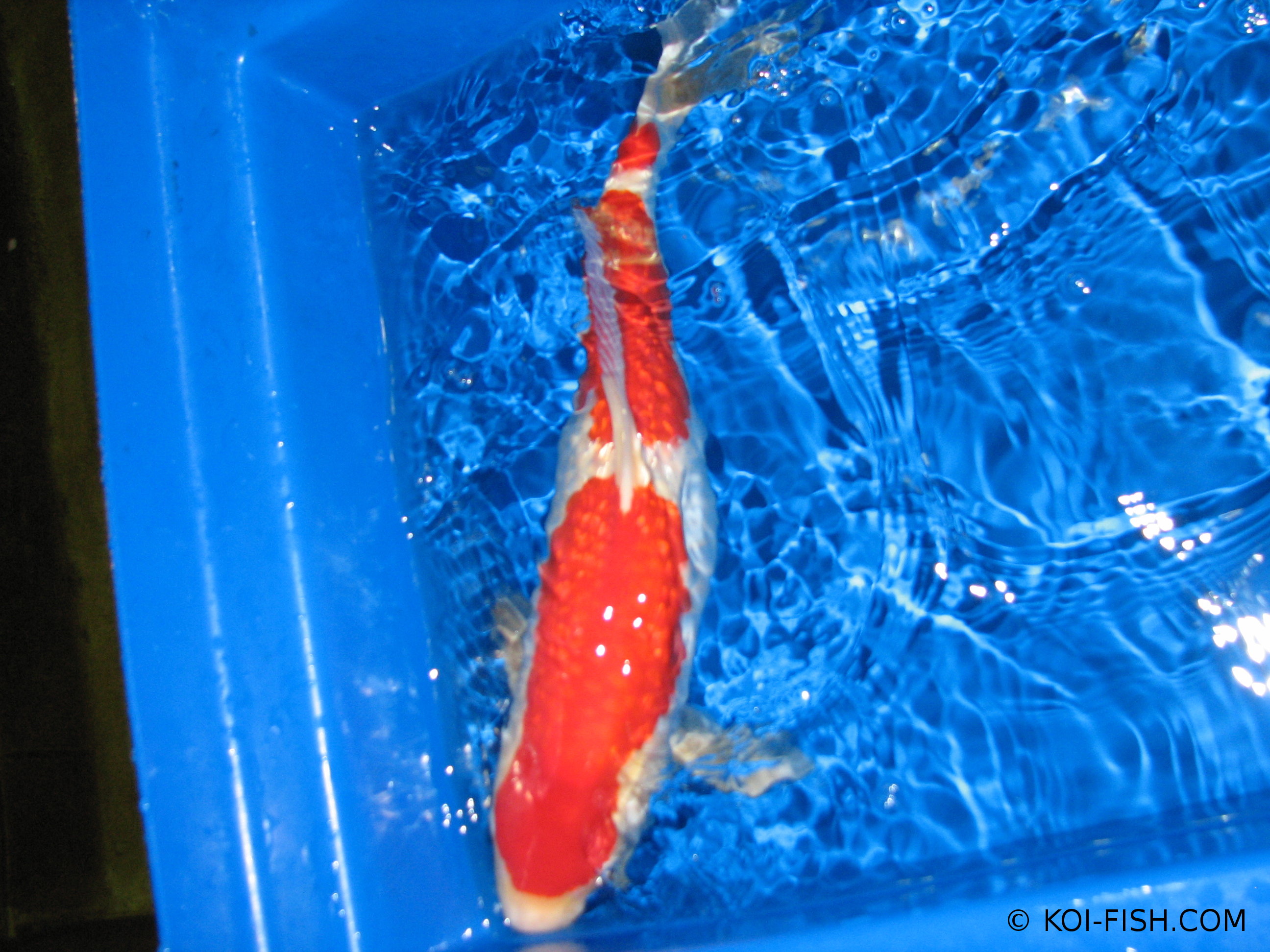
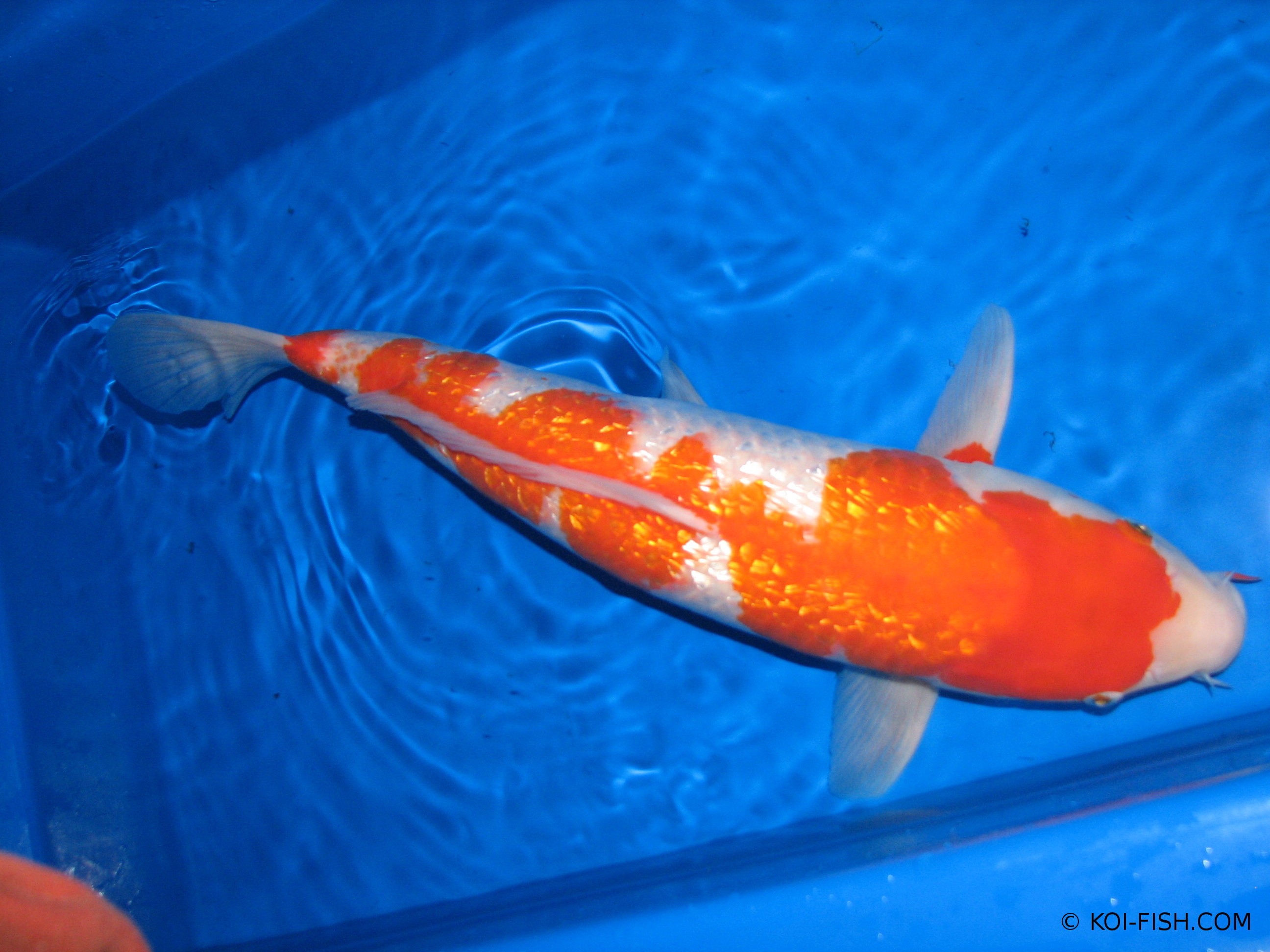
Kohaku are non-metallic white koi with red markings. Their simple two-color appearance makes pattern balance, the white ground, and the quality of the red especially visible. Kohaku belong to Gosanke alongside Sanke and Showa.
How to Identify Kohaku
- A white ground, called shiroji, with red pattern areas called hi or beni.
- No defining black body pattern. Distinct sumi markings suggest comparison with Sanke or Showa.
- A non-metallic finish. A bright light reflection alone does not indicate a metallic variety.
Some Kohaku have fully scaled bodies, some have Doitsu scaling, and Ginrin examples have sparkling scales. These additional descriptions do not remove the basic red-and-white Kohaku identity.
Common Kohaku Pattern Names
A step is a separated area of red pattern. Nidan describes two steps, Sandan three, and Yondan four. Inazuma describes a lightning-like arrangement. These terms help describe what you see; the number of steps is not a complete quality score.
Look at the red pattern from the head through the shoulders to the tail. Large sweeping areas and smaller separated plates can both be attractive. The amount and placement of white space change the effect, so assess the whole body rather than counting marks first.
Tancho and Maruten Are Different
Tancho Kohaku have a single red head marking and no additional red body pattern. A Kohaku with a separate head spot and red elsewhere is described as Maruten. The distinction is about red placement; an attractive round head marking does not make every fish Tancho.
What to Look for in an Individual Fish
Start with a smooth, balanced body and intact fins. Then compare the white ground, consistency of red, and the relationship between the two colors. Kiwa describes the pattern edge; developing edges should be assessed in the context of the fish's age, rather than treated as a promise of a perfectly sharp adult pattern.
Some traditional show preferences favor clean fins and a clear finish near the tail, but hobby enjoyment need not depend on one rigid arrangement. A good pattern is one part of the fish. A famous bloodline, sex, or impressive price does not automatically make one individual healthier or more suitable for your pond.
How the Pattern Can Develop
The appearance of a young Kohaku can change as it grows. Ask for dated photographs of the same fish and distinguish present appearance from predicted potential. A seller cannot guarantee that every edge, shade, or red plate will remain unchanged. Suitable care supports the fish, but it is not a way to design an exact future pattern.
Kohaku Compared with Similar Koi
Sanke add black markings to a red-and-white appearance. Ai Goromo add blue or indigo edging within red scale areas. Kikusui have metallic luster and Doitsu scaling. Examine finish and scale detail before labeling a red-and-white fish from color alone.
Continue with the visual koi directory, buying koi, and quarantine planning.