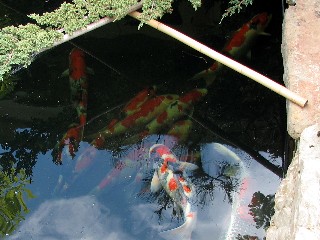
Spring koi care starts with checking the pond before increasing food. Fish may become more active while biological filtration is still adjusting to cool, changing water. A clean-looking system can still experience ammonia or nitrite trouble as feeding resumes.
Inspect Equipment and Water
- Check pumps, valves, aeration, hoses, and winter bypasses.
- Remove collected debris without unnecessarily stripping biological media.
- Measure temperature, ammonia, nitrite, pH, and alkalinity.
- Check the refill source and treat it appropriately.
Take the first readings before changing several things at once. They give you a useful baseline if a problem appears later.
Restart Feeding Gradually
Use the food manufacturer's temperature instructions, actual water conditions, and the fish's response. Begin with small quantities when appropriate and watch the tests as you increase. Begging behavior alone does not prove the pond is ready for a summer ration.
There is no need to rush fish through a supposed fixed “danger zone” by abruptly heating the pond. Temperature affects fish and pathogens in complex ways. Stable conditions and measured observations are more useful than claims that the immune system simply switches off between two numbers.
Check the Koi Without Repeated Catching
Observe swimming, breathing, appetite, fins, and skin from the pond edge. Persistent flashing, wounds, gasping, or a fish isolating itself needs water checks and assessment. Do not begin a blanket parasite treatment just because the calendar says spring.
Plan New Purchases After the System Settles
Adding fish, increasing food, and changing equipment all at once makes a problem harder to diagnose. Confirm stable performance first and have a separate quarantine system ready for purchases.
Review predator access after winter damage or landscape changes. Keep a simple log of the first feed, temperature trend, and water results. Use the feeding guide and symptom guide when deciding your next step.